
PROGRAM
Final Program
The final program is now online: https://ifac.papercept.net/conferences/conferences/LHM21/program
To browse the conference program, to view the PDFs of the papers and to obtain further information, registered conference attendees can use the
- IFAC App (search for “IFAC” in the Apple App Store or in Google Play) for their mobile devices or the
- Web App: https://lhmnc2021-ifac.web.indrina.com.
To access the mobile or web app, please use the e-mail address you indicated in the conference registration.
Proceedings
The proceedings are published in IFAC-PapersOnLine.
Plenary Lectures
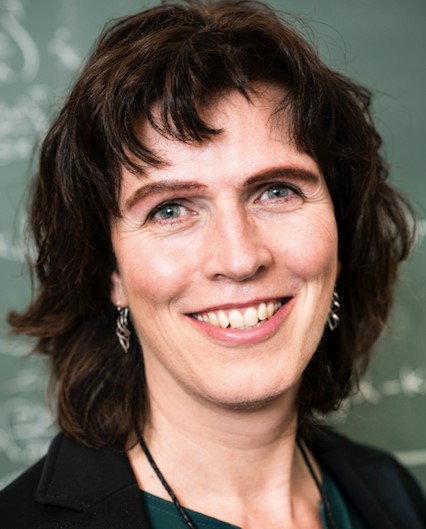
Jacquelien Scherpen, Rijksuniversiteit Groningen, The Netherlands
Krasovskii Passivity and Control with Applications to Brayton-Moser Systems
Abstract: In this talk I will present novel passivity based control techniques by introducing a new passivity concept named Krasovskii passivity. We investigate properties of Krasovskii passive systems and establish relations between four relevant related passivity concepts. We develop novel dynamic controllers based on Krasovskii passivity. The proposed controllers are applicable to a class of systems for which the standard passivity based controllers are not easily applicable. We then consider a class of resistive–inductive–capacitive (RLC) circuits and switched RLC circuits modeled in the Brayton–Moser framework. We study Krasovskii passivity for these systems, and after showing the integrability property of the port-variables, two simple control methodologies based on Krasovskii passivity, called output shaping and input shaping, are proposed for regulating the voltage in the RLC and the switched RLC circuits. Global asymptotic stability is theoretically proved for both the proposed control methodologies. Robustness with respect to load uncertainty is ensured for the input shaping methodology. The applicability of the proposed methodologies is illustrated by designing voltage controllers for DC networks. This is joint work with Yu Kawano, Krishna Pasumarthy and Michele Cucuzzella.
Bio: Jacquelien M. A. Scherpen received her MSc and PhD degrees in 1990 and 1994 from the University of Twente, the Netherlands. She then joined Delft University of Technology and moved in 2006 to the University of Groningen as a professor in Systems and Control Engineering at the Engineering and Technology institute Groningen (ENTEG), fac. Science and Engineering at the University of Groningen, the Netherlands. From 2013 til 2019 she was scientific director of ENTEG. She is currently director of the Groningen Engineering Center, and Captain of Science of the Dutch top sector High Tech Systems and Materials (HTSM).
Her current research interests include model reduction methods for networks, nonlinear model reduction methods, nonlinear control methods, modeling and control of physical systems with applications to electrical circuits, electromechanical systems, mechanical systems, smart energy networks and distributed optimal control applications to smart grids.
Jacquelien has held various visiting research positions, and has been and is at the editorial board of a few international journals among which the IEEE Transactions on Automatic Control, and the International Journal of Robust and Nonlinear Control. She received the 2017-2020 Automatica Best Paper Prize. She received a royal distinction as Knight in the Order of the Netherlands Lion, and she is a fellow of IEEE.
She has been active at the International Federation of Automatic Control (IFAC), and is currently member of the IFAC council. She is a member of the Board of Governors of the IEEE Control Systems Society, and was chair of the IEEE CSS standing committee on Women in Control in 2020. From 2020 to 2021 she is president of the European Control Association (EUCA).
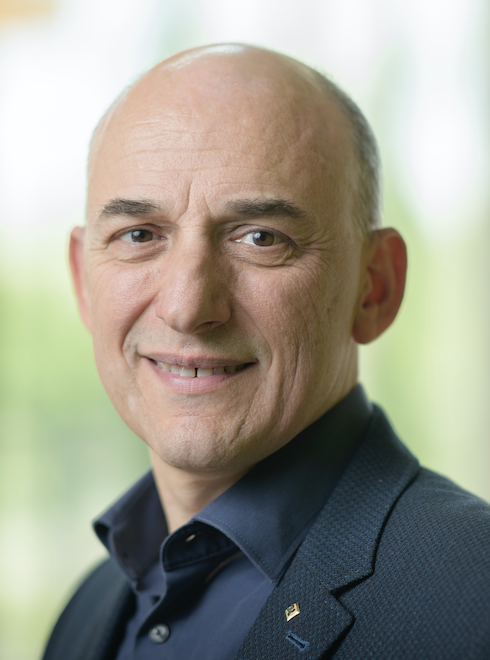
Stefano Stramigioli, University of Twente, The Netherlands
Birds, Fluids and Interaction: Trying to Understand Nature with Physical System Theory, Geometry, and Port-Hamiltonian Systems
Abstract: Bird’s flight is one of the most fascinating examples of nature’s beauty, due to the interaction of the wings and the body of the bird and the complex dynamics of the fluid around it. A lot has been written and studied about it, but yet, a lot of questions still remain. The ERC Project Portwings has the ambition to contribute to the understanding of bird’s flight via proper modelling, control, experimental fluid dynamics, new numeric techniques and engineering and material methodologies. The talk will give an overview of the project and introduce the major steps achieved so far which include a detailed formulation of Navier-Stokes equation with varying boundaries in a completely geometric setting. The talk will conclude with some new insights on novel results which will be soon published.
Bio: Stefano Stramigioli received the M.Sc. with honors (cum laude) in 1992 and the Ph.D with honors (cum laude) in 1998. He is currently full professor in Advanced Robotics. He is an IEEE Fellow, an ERC AdG laureate and member of the Royal Holland Society of Science and Humanities (KHMW). He is currently serving as the Vice President for Research of euRobotics, the private part of the PPP cooperation with the European Commission known as SPARC, the biggest robotic civil program worldwide. He is the coordinator of the Digital Innovation Hub on Robotics for Healthcare (www.dih-hero.eu). Among a number of awards, he received the 2009 IEEE-RAS distinguish service award.
He is currently leading a growing group of about 60 people (http://www.ce.utwente.nl). He has been Editor in chief of the IEEE Robotics and Automation Magazine, which he brought from the seventh to the first place in the ranking of the Impact Factor among all journals on Robotics. He has furthermore been Editor in Chief of the IEEE ITSC Newsletter and guest editor for others. He is member of the Editorial Board of the Springer Journal of Intelligent Service Robotics.
He has been an AdCom member of the IEEE Robotics and Automation Society, he has been the founder and chair of the Electronic Products and Services of the IEEE Robotics and Automation Society and he has been serving as Vice President for Membership of the same society for two consecutive terms. He is involved in different projects related to Control and Robotics for medical & inspection applications.
Nationally has been the founder and chair of RoboNED, the national platform coordinating all academic, industrial and governmental institutions on Robotics and responsible for producing a Strategic Research Agenda for Robotics for the Netherlands and he is one of the initiator of the LEO (www.leo-robotics.eu) robotics center, the first robotic center in the Netherlands. He has been teaching Modeling, Control and Robotics for under and post-graduates. He has around 350 publications including 4 books.
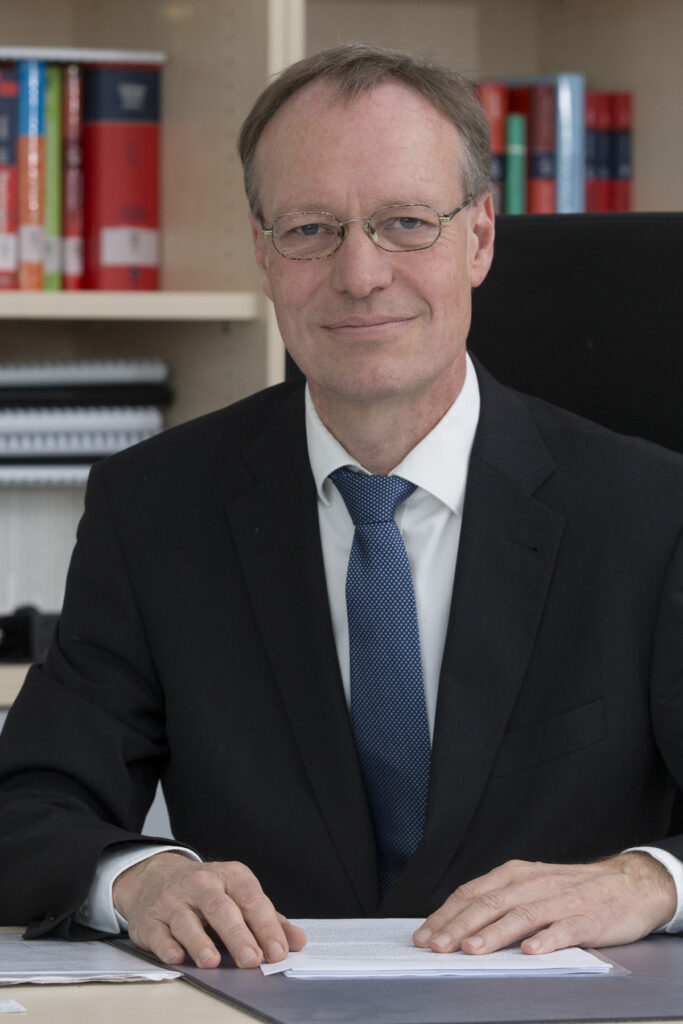
Oliver Sawodny, Universität Stuttgart, Germany
Model-based Toolchain for Control of Adaptive Structures and Facades in Civil Engineering
Abstract: The building sector consumes currently more than 40% of global resources and energy. Projecting the demand of buildings according to the increasing world population lead to significant resource problems in the near future. Therefore, increasing efficiency and reducing resources in the building sector is a crucial task. Adaptivity of the load bearing structures as well as the fa¸cade elements offers a high potential to reduce grey energy due to ultra light-weight load bearing structures respectively new ideas concerning energy reduced building elements and comfort oriented climate control. In the talk a systems engineering view on the specific problems in adaptive buildings is given. Starting from PH-based modeling, the problem of sensor and actuator placement is discussed. For the control system of the active load bearing a complete model-based tool chain for state estimation, disturbance compensation, fault diagnosis, static compensation, and control reconfiguration was developed. The results will be demonstrated in a 36 m high rise multi-storey building.
Bio: Professor Sawodny received his Dipl.-Ing. degree in electrical engineering from the University of Karlsruhe, Karlsruhe, Germany, in1991 and his Ph.D. degree from the University of Ulm, Ulm, Germany, in 1996. In 2002, he became a Full Professor at the Technical University of Ilmenau, Ilmenau, Germany. Since 2005, he has been the Director of the Institute for System Dynamics, University of Stuttgart, Stuttgart, Germany.
His current research interests include methods of differential geometry, trajectory generation, and applications to mechatronic systems. He received important paper awards in major control application journals such as Control Engineering Practice Paper Prize (IFAC, 2005) and IEEE Transaction on Control System Technology Outstanding Paper Award (2013). He is member of the editorial board of several journals. He is currently leading a growing group of about 50 people (http://www.isys.uni-stuttgart.de).
He has research collaboration projects with many companies as Audi, Bosch, Daimler, Zeiss, among others. He is the spokesman of large research initiatives of the German Research Foundation (DFG) like the CRC 1244 Adaptive skins and structures for the built environment of tomorrow and the RTG 2543 Intraoperative Multisensory Tissue Differentiation in Oncology. He is member in the board of directors of the Cluster of Excellence Integrative Computational Design and Construction for Architecture (IntCDC).
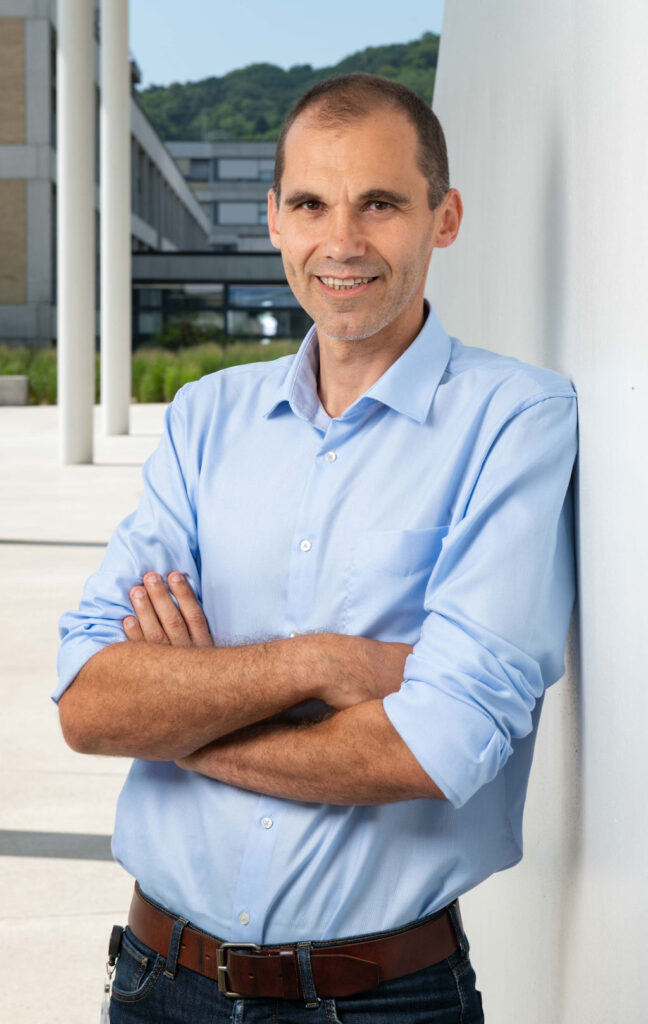
Herbert Egger, Johannes Kepler University Linz and
Johann Radon Institute for Computational and Applied Mathematics, Austria
On the Energy-Based Modelling and Structure-Preserving Approximation of Finite and Infinite Dimensional Dynamical Systems
Abstract: The modelling of dynamical processes in various fields of applications is usually based on common physical principles among which the conservation or dissipation of energy plays a pivotal role for stability. These principles can be encoded in a particular geometric structure of the mathematical models, for instance port-Hamiltonian or gradient systems, and the preservation of these structures is of great interest for the numerical approximation. A key ingredient for the systematic modelling and simulation thus is the identification of an appropriate structure and the corresponding problem formulation. In this talk, we discuss a class of “generalized gradient systems” which allow for a systematic approximation in space and time by variational discretization schemes including projection based model order reduction. The wide applicability of the approach will be demonstrated by various applications including nonlinear problems in electromagnetics and acoustics as well as multibody dynamics. The rephrasing of these problems as “generalized gradient systems” leads to non-standard formulations and discretization schemes with interesting properties.
Bio: Herbert Egger received his Diploma in Industrial Mathematics in 2002 and the Doctor of Technical Sciences in 2005 from the Johannes Kepler University in Linz. After substituting the Chair for Industrial Mathematics and Applications at TU Chemnitz, he became Professor for Scientific Computing at TU Munich in 2011 and Full Professor for Numerical Mathematics and Scientific Computing at TU Darmstadt in 2012. In 2021, he joined the Johannes Kepler University (JKU) Linz and the Johann Radon Institute for Computational and Applied Mathematics (RICAM) as Professor and Group leader for Computational Mathematics.
His current research focuses on the analysis and numerical solution of partial differential and differential algebraic equations, with particular emphasis on the energy-based modelling and structure preserving approximation by generalized Galerkin methods, like mixed finite elements, reduced basis, and variational time discretization schemes. Applications under his consideration include fluid dynamics, energy networks, acoustic and electromagnetic wave propagation, phase-separation phenomena, and electro-mechanical systems as well as related inverse problems. He received best paper awards from the Journal of Inverse Problems and the Rosenbrock Prize from Optimization and Engineering.
Herbert is member of the GAMM Activity Group on Numerical Analysis and of the German/Austrian Society for Inverse Problems (GIP). He was member of the Steering Comittee of the Aachen Institute for Advanced Study in Computational Engineering Science at RWTH Aachen and the Center for Computational Engineering at TU Darmstadt, and recently became member of the Board of Scientific Directors at RICAM.
Workshop “30 years of port-Hamiltonian systems & 60th anniversary of Bernhard Maschke”
Program, Room EW 201
Thursday, October 14, 2021
| 9:15-10:00 | Arjan van der Schaft | Reflections on 30 years of port-Hamiltonian systems theory |
| 10:00-10:45 | COFFEE BREAK | |
| 10:45-11:30 | Volker Mehrmann | Port-Hamiltonian descriptor systems, a Jack of all trades!? |
| 11:30-12:00 | Denis Matignon | Positive attitude and exchange of ideas: the port-Hamiltonian way of life, a tribute to Bernhard Maschke |
| 12:00-13:45 | LUNCH | |
| 13:45-14:30 | Paul Kotyczka | On structure preservation in numerical models of conservation laws |
| 14:30-15:15 | Hans Zwart | What we know of P1 and not of PN |
| 15:15-15:45 | COFFEE BREAK | |
| 15:45-16:30 | Bernhard Maschke | About the geometry of Port Hamiltonian Systems |
| 16:30-17:00 | Yann Le Gorrec – Hector Ramírez | From conservation of energy to irreversible entropy production: 20 years of Bernhard’s thoughts |
| 17:00-17:30 | Jean Pierre Marco | Entropy and complexity in the integrable domain |
| 17:30-18:00 | Mamadou Diagne | Control of an extrusion process |
Friday, October 15, 2021
| 9:15-9:45 | Alejandro Franco | Digital Twins of Battery Manufacturing Processes |
| 9:45-10:15 | Witold Respondek | Differential-algebraic equations versus control systems: linear and nonlinear |
| 10:15-11:00 | COFFEE BREAK | |
| 11:00-11:30 | Pierre Rouchon | Quantum error correction and stabilisation via automous feedback |
| 11:30-12:00 | Charles Michel Marle | Memories and comments on some works of Bernhard Maschke |
| 12:00-12:30 | Dorothée Normand-Cyrot | Some insights into discrete time and sampled data port-Hamiltonian systems |
Social Program
Welcome Reception
The welcome reception will take place on Monday, October 11, at 7:00 pm in the library of the Mathematics Institute.
No Organized Conference Dinner on Tuesday
Due to the current regulations it is not possible to organize the conference dinner in the desired way. The corresponding fees will be refunded after the workshop.
In any case, the neighborhood of TU Berlin with plenty of restaurants will allows us to spend the evening in a pleasant atmosphere with good food and drinks!
This does not affect the birthday dinner on Thursday, for which is still scheduled.