GENERAL INFORMATION
Theme and vision IFAC World Congress
In a post-pandemic world, how people interact has been reshaped, and will further evolve, by the experiences during the pandemic. Additionally, with climate change as the most pressing problem humanity is facing, will it make sense to move thousands of people around the world as we used to do?
We believe the organization of IFAC 2029 cannot be oblivious to these developments, and thus we have selected as motto: “A sustainable IFAC World Congress in a data-rich interconnected world”.
General chairs

Ming Cao
University of Groningen
is a professor of networks and robotics with the Engineering and Technology Institute (ENTEG) at the University of Groningen, the Netherlands. He received the Bachelor degree in 1999 and the Master degree in 2002 from Tsinghua University, China, and the Ph.D. degree in 2007 from Yale University, USA. From 2007 to 2008, he was a Research Associate at Princeton University, USA. He worked as a research intern in 2006 at the IBM T. J. Watson Research Center, USA. He is the 2017 and inaugural recipient of the Manfred Thoma medal from the International Federation of Automatic Control (IFAC) and the 2016 recipient of the European Control Award sponsored by the European Control Association (EUCA). He is an IEEE fellow (class 2022). He is a Senior Editor for Systems and Control Letters, an Associate Editor for IEEE Transactions on Automatic Control, IEEE Transaction of Control of Network Systems and IEEE Robotics & Automation Magazine, and was an associate editor for IEEE Transactions on Circuits and Systems and IEEE Circuits and Systems Magazine. He is a member of the IFAC Conference Board and a vice chair of the IFAC Technical Committee on Large Scale Complex Systems. He is the program chair of SIAM CT’21 and a program co chair of IFAC LSS’19 and NecSys’18. His research interests include autonomous robots and multi agent systems, complex networks and decision making processes.

Manuel Mazo
Delft University of Technology
is associate professor of symbolic and networked control at the Delft Center for Systems and Control, Delft University of Technology (The Netherlands). He received the Ph.D. and M.Sc. degrees in Electrical Engineering from the University of California, Los Angeles, in 2010 and 2007 respectively. He also holds a Telecommunications Engineering” Ingeniero ” degree from the Polytechnic University of Madrid (Spain), and a Civilingenjör ” degree in Electrical Engineering from the Royal Institute of Technology (Sweden), both awarded in 2003. Between 2010 and 2012 he held a post doctoral position at the University of Groningen (The Netherlands). He received an ERC Starting Grant in 2017. He is an IEEE senior member, co chair for Tools in the IEEE CSS TC on Hybrid Systems, and a member of the IFAC TC on Discrete Event and Hybrid Systems and the TC on Networked Control Systems. He is an Associate Editor of the IFAC journal Nonlinear Analysis: Hybrid Systems, and serves in the program committee on multiple IEEE and IFAC sponsored conferences such as HSCC, ICCPS, LSS, ECC and EBCCSP. He served as publicity chair of ECC’21. His research interest is modern control system implementations, in particular networked control systems, and the application of formal verification and synthesis techniques to control.
International Program Committee (IPC)

Antonella Ferrara
University of Pavia
received the M.Sc. degree (Cum Laude and printing honors) in electronic engineering and the Ph.D. degree in computer science and electronics from the University of Genoa, Italy, in 1987 and 1992, respectively. Since 2005, she has been Full Professor of automatic control at the University of Pavia, Italy. Her main research interests include sliding mode control and nonlinear control applied to automotive, automotive systems, road traffic, power networks, and robotics. She is author and co-author of more than 400 publications including more than 140 journal papers, 2 monographs and one edited book.
She is Associate Editor of Automatica, and Senior Editor of the IEEE Open Journal of Intelligent Transportation Systems. She was Associate Editor of the IEEE Transactions on Control Systems Technology, IEEE Transactions on Automatic Control, IEEE Control Systems Magazine, International Journal of Robust and Nonlinear Control, and Senior Editor of the IEEE Transactions on Intelligent Vehicles. Antonella Ferrara is the EUCA Conference Editorial Board Chair. She is a member of IFAC TC on Nonlinear Control Systems, IFAC TC on Transportation Systems, IFAC TC on Intelligent Autonomous Vehicles, IEEE TC on Automotive Control, IEEE TC on Smart Cities, and IEEE TC on Variable Structure Systems. Among several awards, she was a co-recipient of the 2020 IEEE Transactions on Control Systems Technology Outstanding Paper Award. She is a Fellow of IEEE.
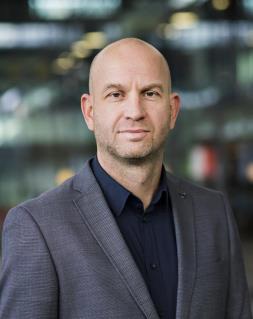
Maurice Heemels
received M.Sc. (mathematics) and Ph.D. (control theory) degrees (summa cum laude) from the Eindhoven University of Technology (TU/e) in 1995 and 1999, respectively. From 2000 to 2004, he was with the Electrical Engineering Department, TU/e, as an assistant professor, and from 2004 to 2006 with the Embedded System Institute (ESI) as a research fellow. Since 2006, he has been with the Department of Mechanical Engineering, TU/e, where he is currently a Full Professor. Maurice held visiting professor positions at Swiss Federal Institute of Technology (ETH), Switzerland (2001), University of California at Santa Barbara (2008) and University of Lorraine, France (2020).
Eindhoven University of Technology
His current research includes general systems and control theory, hybrid and cyber-physical systems, networked and event-triggered control systems, and MPC. Dr. Heemelsserved/s on the editorial boards of Automatica, Nonlinear Analysis: Hybrid Systems, Annual Reviews in Control, and IEEE Transactions on Automatic Control. He was a recipient of a personal VICI grant awarded by NWO (Dutch Research Council). He is a Fellow of the IEEE and is currently chair of the IFAC Technical Committee on Networked Systems (2017-2023). He was the recipient of the 2019 IEEE L-CSS Outstanding Paper Award and was elected for the IEEE-CSS Board of Governors (2021-2023). He will be the new Editor-in-
National Organizing Committee (NOC)
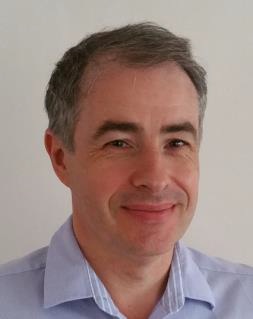
Bart De Schutter
Delft University of Technology
is full professor and head of department at the Delft Center for Systems and Control (DCSC) of Delft University of Technology. He received the PhD degree in 1996 at K.U.Leuven, Belgium. He moved to Delft University of Technology in 1998 as assistant professor. In 2006 he became full professor. . His current research interests include multi-level multi-agent control of large-scale networks, reinforcement learning, optimization-based control, control of discrete-event and hybrid systems, intelligent transportation networks, and smart infrastructure networks. He was awarded the Richard C. DiPrimaPrize for this PhD thesis by SIAM. He received an ERC Advanced Grant in 2021.
Bart De Schutteris member of the IFAC Conference Board since 2020. He was chair of IFAC TC 7.4 (2014-2020), vice-chair of IFAC TC 7.4 (2006-2008, 2010-2013, 2020-present) and member of the Board of Governors of the IEEE ITS Society (2008-2010, 2013-2018). He is associate editor of IEEE Transactions on Automatic Control (since 2018) and senior editor of IEEE Transactions on Intelligent Transportation Systems (since 2016). He was associate editor of Automatica(2004-2016), IEEE Transactions on Intelligent Transportation Systems (2004–2015), and Nonlinear Analysis: Hybrid Systems (2011-2016). He was general co-chair of IFAC ADHS 2012; program co-chair of NecSys2013, IEEE ITSC (2005, 2013), IEEE ICNSC 2011; IPC chair of IFAC CTS (2009, 2016, 2018, 2021).
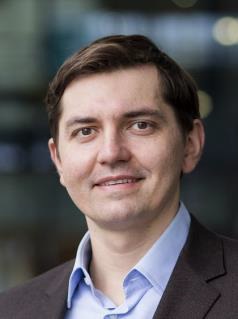
Mircea Lazar
Eindhoven University of Technology
is associate professor and head of the Constrained Control of Complex Systems Lab within the department of Electrical Engineering, Eindhoven University of Technology (TU/e). He received the Ph.D. degree in control engineering in 2006 from TU/e. His research interests cover stability theory, Lyapunov functions, distributed control and constrained control of nonlinear systems, including model predictive control. His research is driven by control problems in power systems, power electronics, high-precision mechatronics, automotive and biological systems. Dr. Lazar received the European Embedded Control Institute PhD Award in 2007. He received a VENI grant from NWO (Dutch Research Council) in 2008.
Dr. Lazar was the general chair of the 4th IFAC Nonlinear Model Predictive Control Conference (2012) and a co-chair of the Benelux Meeting on Systems and Control (2014-2018). He was the Chair of the IEEE CSS Technical Committee on Hybrid Systems (2011-2016). He is an Active Member of IFAC Technical Committee-2.3 Nonlinear Control Systems and the IFAC Technical Committee-1.3 Discrete Event and Hybrid Systems. He is an Associate Editor of IEEE Transactions on Automatic Control (TAC). He was an Associate Editor of the IFAC Journal on Nonlinear Analysis: Hybrid Systems (2011-2016) and the IFAC World Congress (2017-2020). Member of the IEEE CSS Conference Editorial Board (2009-2011), the IPC of IFAC ADHS (2009-2021), IFAC NMPC (2012-2021), European Control Conference (2013-2020) and IFAC COSY (2022).
Finance
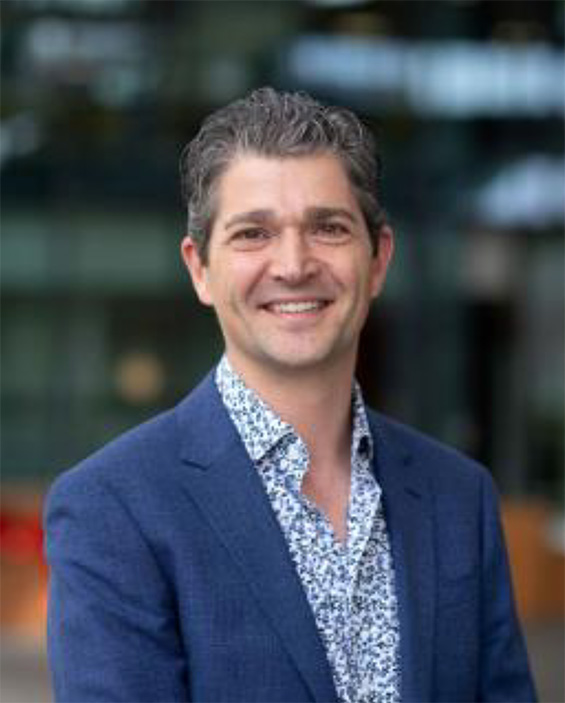
Tom Oomen
Eindhoven University of Technology
is full professor with the Department of Mechanical Engineering at the Eindhoven University of Technology. He is also a part-time full professor with the Delft University of Technology. He received the M.Sc. degree (cum laude) and Ph.D. degree from the Eindhoven University of Technology, Eindhoven, The Netherlands. He held visiting positions at KTH, Stockholm, Sweden, and at The University of Newcastle, Australia. He is a recipient of the 7th Grand NagamoriAward, the Corus Young Talent Graduation Award, the IFAC 2019 TC 4.2 Mechatronics Young Research Award, the 2015 IEEE Transactions on Control Systems Technology Outstanding Paper Award, the 2017 IFAC Mechatronics Best Paper Award, the 2019 IEEJ Journal of Industry Applications Best Paper Award, and of a Veniand Vidipersonal grant.
He is Associate Editor of the IEEE Control Systems Letters (L-CSS), IFAC Mechatronics, and IEEE Transactions on Control Systems Technology. He has been vice-chair for IFAC TC 4.2, NOC for the 2019 IFAC LPVS workshop, Program Vice-Chair for IEEE CDC 2022, Registration Chair for the IEEE CCTA 2023, in addition to a large number of IPC roles. He is a member of the Eindhoven Young Academy of Engineering. His research interests are in the field of data-driven modeling, learning, and control, with applications in precision mechatronics.

Jan Willem van Wingerden
Delft University of Technology
graduated cum laude in mechanical engineering at TU Delft in 2004. In 2008 he obtained his doctorate, cum laude, in mechanical engineering at the Delft Center for Systems and Control (DCSC) for his study Control of Wind Turbines with ‘Smart’ Rotors: Proof of Concept & LPV Subspace. After obtaining his doctorate, van Wingerden started working as a tenure tracker at DCSC (3mE). In 2012 he was awarded an NWO Venigrant and 2019 an NWO VIDI grant for his research on wind farm control, and he became associate professor in 2013. Since 2017 he is leading the data-driven control section within the Delft Center for Systems and Control, where he is currently a Full Professor.
Jan-Willem is passionate about the development of data-driven control systems for wind turbines and wind farms. In recent years he and his team developed novel data-driven flow models for coordinated wind farm control and showed that these models are key enablers for robust closed-loop wind farm control. Among other activities, he organized several invited sessions at the IFAC co-sponsored American Control Conference and European Control Conference. He is the vice-chair of IFAC Technical Committee-1.1, Modeling, Identification and Signal Processing, Member of the IEEE CSS Conference Editorial Board (2017-ongoing).
More about IFAC
Founded in 1957, the International Federation of Automatic Control (IFAC) is a multi-national federation that promotes automatic control and its applications in the fields of engineering, science and the impact of control technology on society.
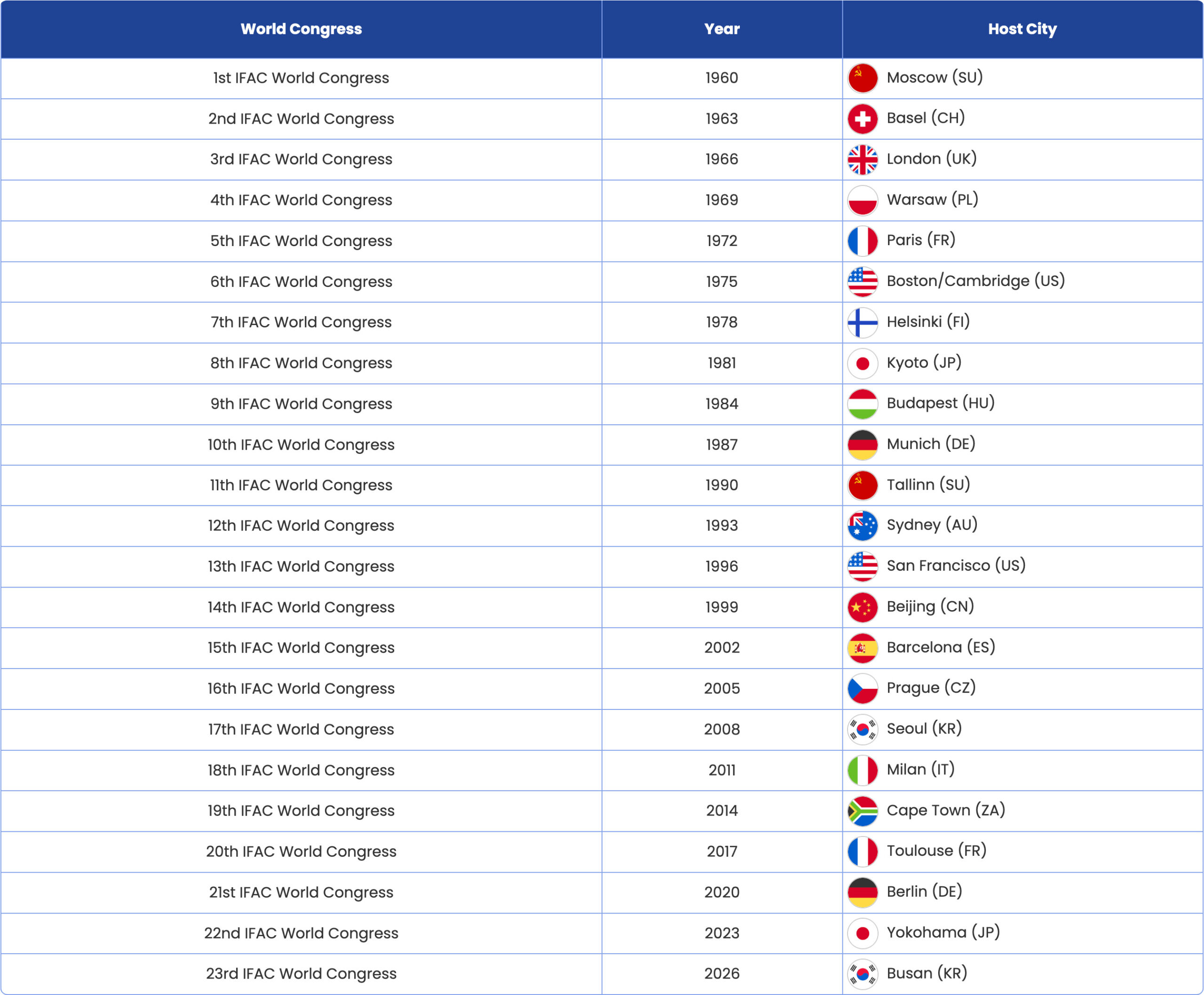
The IFAC World Congress (WC) is the flagship event of the IFAC, held every three years with thousands of attendees from all over the world and with no other IFAC event scheduled in the year of WC. The main aim of the IFAC WC is to bring together a worldwide audience of scientists and engineers from academia and industry, offering the most up-to-date and complete view of control techniques with the widest coverage of application fields.
Diversity and Inclusion statement
IFAC, as an international federation serving and representing all those concerned with the theory and application of automatic control and systems engineering wherever situated, is devoted to creating and fostering an inclusive environment that is open to diverse thoughts, ideas, and communications, without fear of discrimination, harassment, or retaliation against any member of this community. It is committed to providing equal opportunities and a safe environment for every person who chooses to participate in its work. Additionally, IFAC strives for these same principles for all IFAC activities, including technical events, journals, and its various committees and governing boards.
IFAC actively promotes the inclusion of a diverse set of members of its boards and committees at all levels, which will lead to more representative decisions, policies and activities across IFAC.
IFAC actively promotes the inclusion of a diverse set of speakers, which will lead to more representative discussions across IFAC.
IFAC actively promotes the inclusion of a diverse set of speakers, which will lead to more representative discussions across IFAC.
IFAC actively promotes the inclusion of a diverse set of members of its boards and committees at all levels, which will lead to more representative decisions, policies and activities across IFAC.
Contact
For any question relative to the organisation of the conference, feel free to contact the Congress Secretariat:
Congress Solutions
Europalaan 16
5232 BC ’s-Hertogenbosch
The Netherlands
Phone: +31 (0)85 580 38 34
Email: info@congress-solutions.com
Website: www.congress-solutions.com
Chamber of Commerce (KVK): 99118858