PROGRAM
Program Overview
To be announced by June 2027.
Proceedings
The proceedings shall be published shortly after the conference in IFAC-PapersOnLine
Plenary lectures
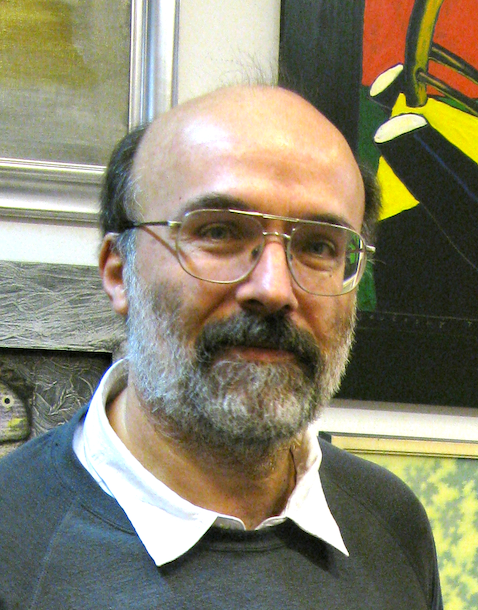
Igor Podlubny
Title : Generalized differentiation meets generalized probabilities
Session : Date, heure et salle de la présentation
Professor, Technical University of Kosice, Slovakia
Bio : Professor Igor Podlubny is a leading scholar in fractional calculus, fractional differential equations, and fractional-order systems and control. He holds the title of University Professor and received his PhD in Differential Equations and Mathematical Physics from Odessa State University. He is widely known for his seminal book, Fractional Differential Equations, and for influential contributions to fractional-order controllers, numerical methods, and the mathematical foundations and applications of fractional calculus. His research has helped shape the development of the field across mathematics, engineering, and control. Professor Podlubny has served on the editorial board of Fractional Calculus and Applied Analysis and was named Scientist of the Year in Slovakia in 2012.
Abstract : The links between generalized differentiation (fractional-order differentiation and integration), on one side, and generalized probabilities (negative probabilities and signed probability distributions), on the other, will be presented. The lecture will begin with a memorial tribute to the late Professor Yangquan Chen.
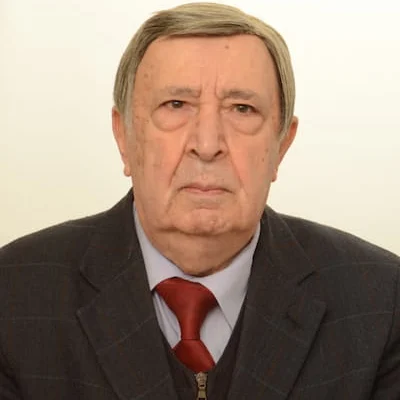
Francesco Mainardi
Title : Special Lecture: Celebrating the 100th Anniversary of Professor Michele Caputo
Session : Date, heure et salle de la présentation
Retired Professor of Mathematical Physics, Department of Physics and Astronomy, University of Bologna, Italy
In 2027, the fractional calculus community will celebrate the 100th birthday of Professor Michele Caputo, born on 5 May 1927. Professor Caputo is one of the key pioneers in fractional calculus, and the derivative bearing his name has become fundamental in many areas of applied mathematics, physics, engineering, and control.
Professor Francesco Mainardi, who was a PhD student of Professor Caputo at the University of Bologna in the late 1960s and co-authored papers with him in 1971, will present the advent of the Caputo fractional derivative in the fractional calculus community. The lecture will reflect on its historical development, its extension from its original geophysical context toward applied mathematics, and its subsequent growing influence within the field.

Antonio Visioli
Title : Fractional-order (PID) control systems for the process industry
Session : Date, heure et salle de la présentation
Department of Mechanical and Industrial Engineering, University of Brescia, Brescia, Italy
Bio : Antonio Visioli is Full Professor of Systems and Control Engineering at the Department of Mechanical and Industrial Engineering, University of Brescia, Italy. He received his PhD in Applied Mechanics from the University of Brescia in 1999, following earlier studies in Electronic Engineering at the University of Parma. His research focuses on industrial control, mechatronics, dynamic-inversion-based control, and fractional-order control, with particular interest in the application of fractional calculus to control-system design and performance improvement. He has contributed extensively to research projects at national and European levels, including the I-MECH and PUSH-CCC projects. Prof. Visioli is a Senior Member of IEEE and Chair of the IFAC Technical Committee on Education. He has held major organisational roles in leading international control conferences and serves as Technical Editor for IEEE/ASME Transactions on Mechatronics, as well as on the editorial boards of several other international journals.
Abstract : In recent years, a wealth of design methodologies has been developed for fractional-order (FO) control systems. However, the process industry remains dominated by integer-order Proportional-Integral-Derivative (PID) controllers. Industry reluctance to adopt FO technology stems from several factors that must be addressed before fractional-order
operators can be considered an improvement over the standard, well-understood algorithm. These factors extend beyond tuning and implementing the core FOPID algorithm to include performance assessment, as well as the development and validation of typical process-control structures in which the FOPID controller serves as the fundamental building block. In this talk, research efforts in this direction will be presented, with a focus on proposing FOPID controllers as a viable tool for general process control applications. Methodologies for tuning, implementing, and using typical control structures will be presented with the aim of fostering discussion in this context.
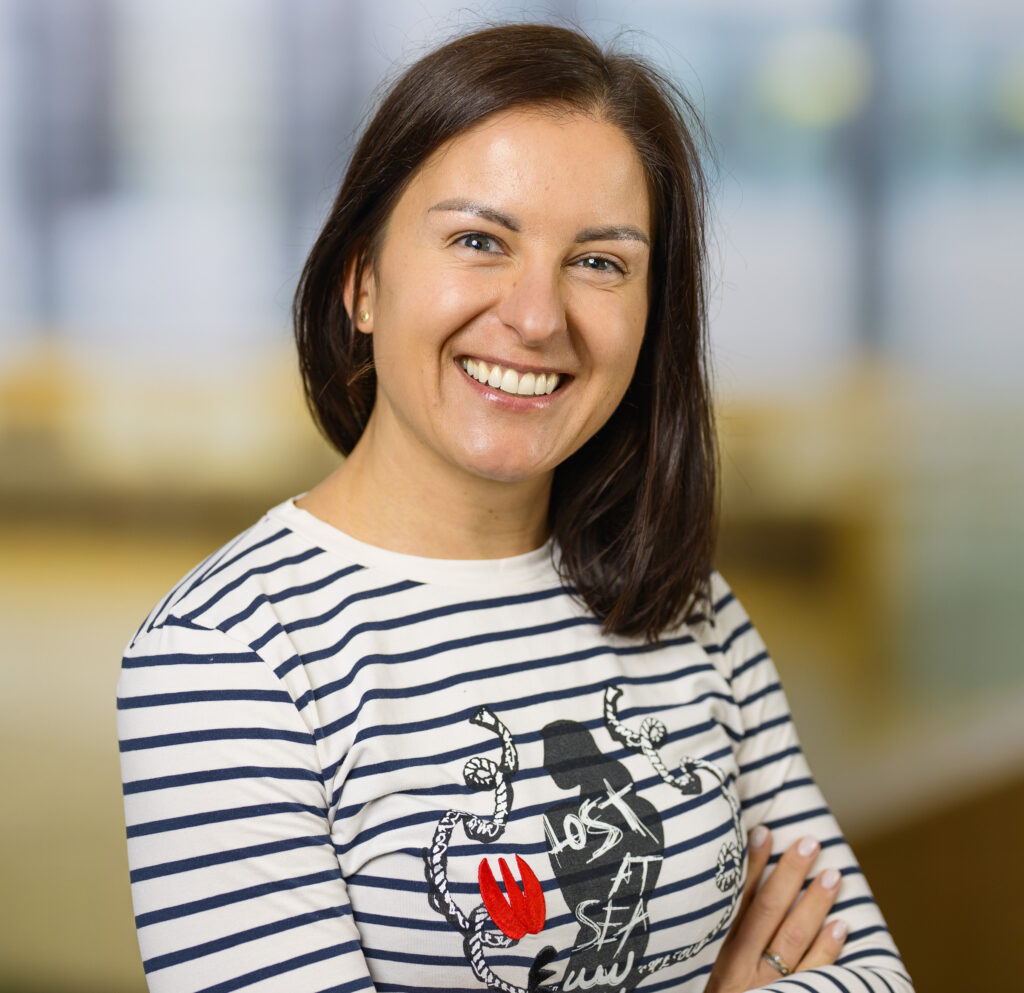
Kateryna Marynets
Title : Fractional Initial and Boundary V alue Problems: from qualitative analysis to numerical simulations
Session : Date, heure et salle de la présentation
Delft Institute of Applied Mathematics, Delft University of Technology, The Netherlands
Bio : Kateryna Marynets is an Assistant Professor at Delft Institute of Applied Mathematics. She earned her PhD in mathematics from Taras Shevchenko National University of Kyiv, specializing in differential equations. Before joining TU Delft, she worked at Uzhhorod National University in Ukraine and was a postdoctoral researcher at the University of Vienna. Her research focuses on the analysis and approximation of solutions to nonlinear boundary value problems for real-order differential equations. She is particularly interested in applications arising from geosciences, as well as in dynamical systems with memory and anomalous diffusion.
Abstract : In recent years fractional initial and boundary value problems have attracted much attention in the field of mathematical modeling due to the ability of fractional operators to capture non-local and memory effects. Such effects are relevant in many physical processes, thus making fractional differential equations (FDEs) a suitable modeling tool. Despite of the mentioned advantages of fractional operators, the inherent nonlocality of fractional calculus introduces several difficulties. Closed-form solutions to FDEs – particularly those encountered in engineering and applied sciences – are rarely available, especially when nonlinearities are involved. Traditional analytical methods tend to have limited applicability or require substantial adaptation to handle fractional formulations. In addition, the computational cost of numerical techniques for FDEs is typically higher than for classical integer-order models.
In my talk I will explain how a suitable parametrization technique and construction of functional sequences can not only ensure existence and uniqueness of solutions to the studied FDEs, but also enables approximation of these solutions with high precision. The presented results will be based on the recent papers with Niels Goedegebure [1, 2].
References
[1] N. Goedegebure, K. Marynets, Nonlinear fractional-periodic boundary value problems with Hilfer fractional derivative: existence and numerical approximations of solutions, preprint (2026), doi:10.48550/arXiv.2601.13584.
[2] N. Goedegebure, K. Marynets, A numerical Bernstein splines approach for nonlinear initial value problems with Hilfer fractional derivative, preprint (2025), doi:10.48550/arXiv.2503.22335; to appear in Mathematics and Computers in Simulation.
Workshops
Instructions for speakers
Each paper will be allotted 15 minutes for presentation, and 5 minutes for questions.
Regular and invited papers must be presented to be included in the proceedings published shortly in IFAC-PapersOnLine.
Social Program
To be announced.